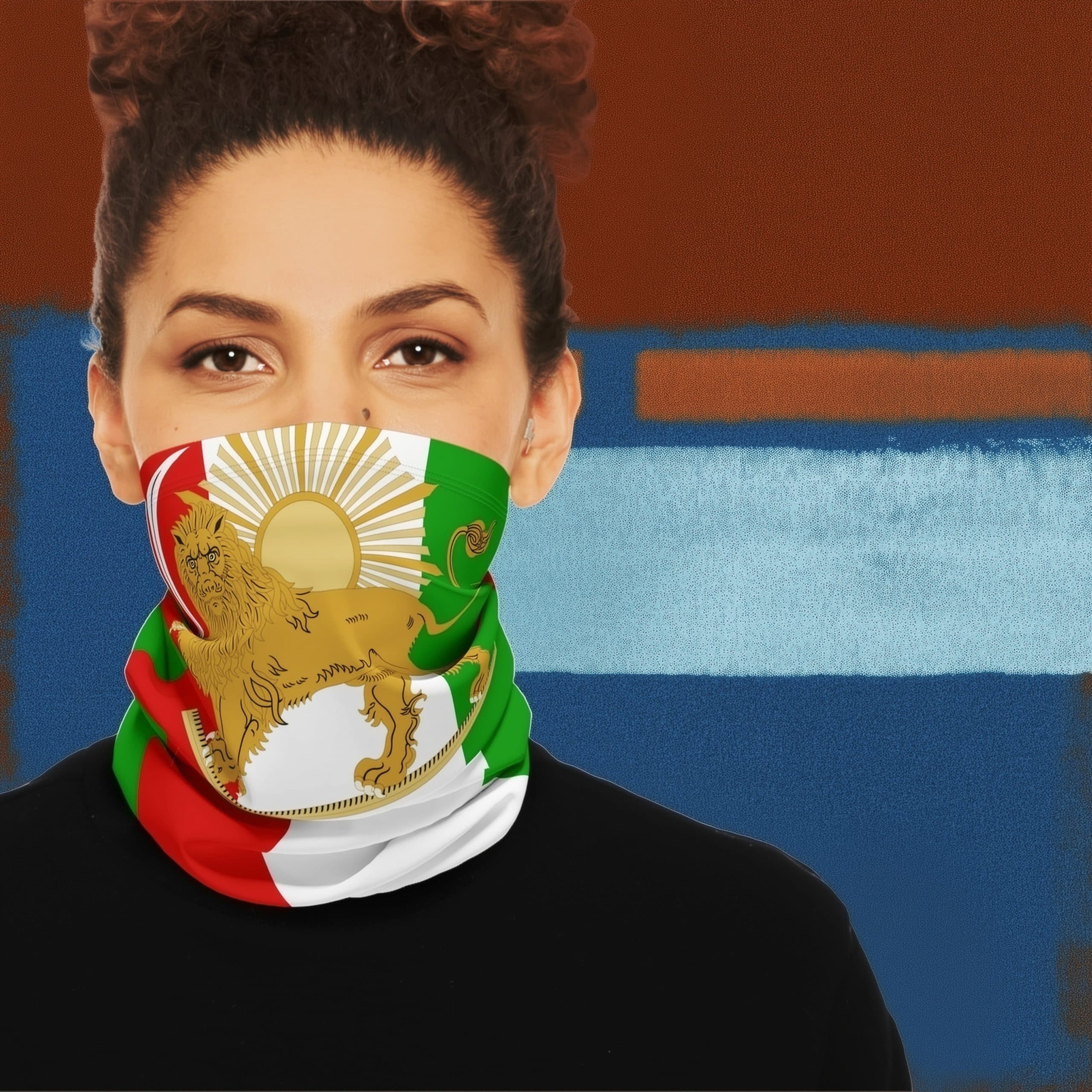
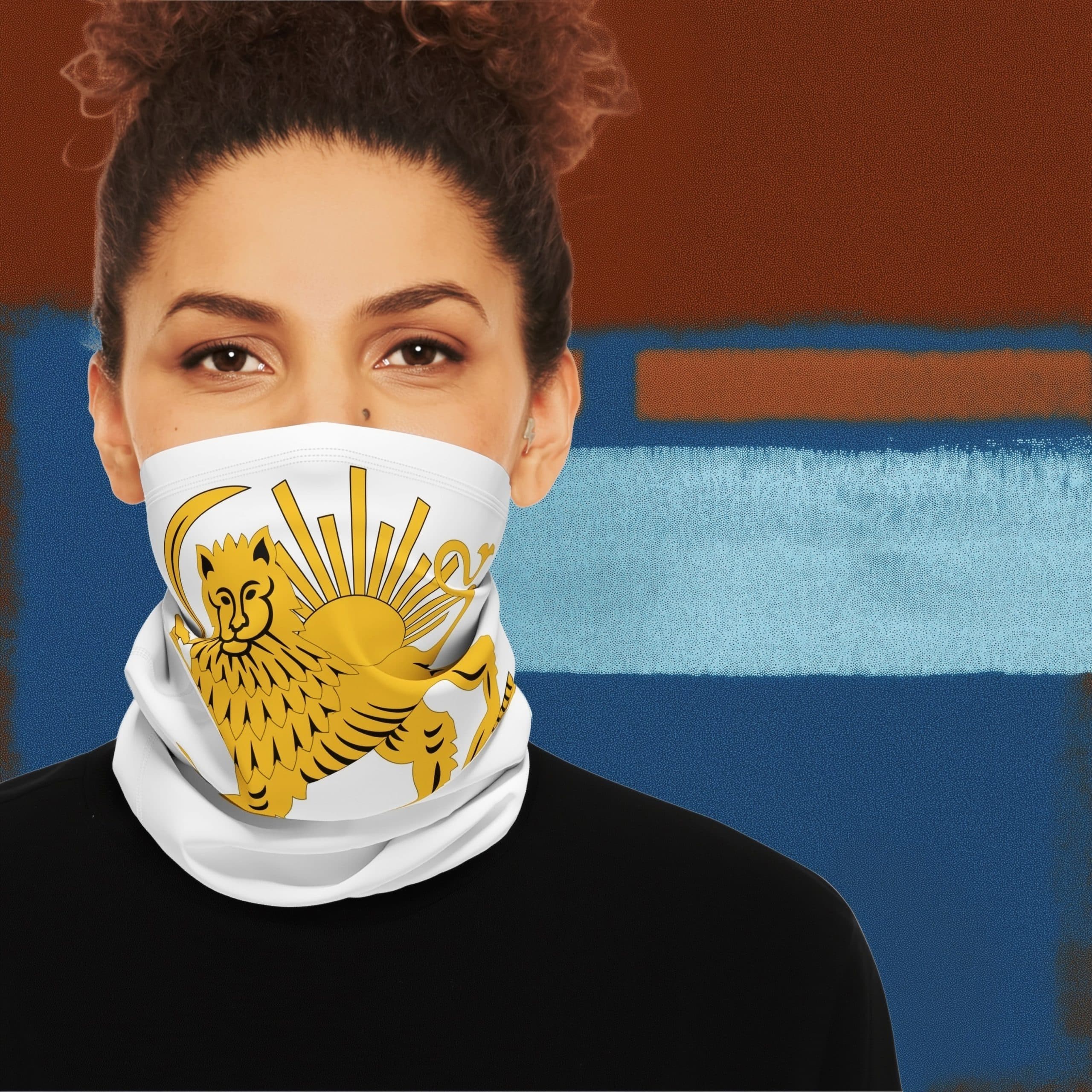
Unusually for an old emblem, we know when most of this design was decided — and who decided it.
Six parts of the Lion & Sun, and the dates they arrived. Unusually for an old emblem, we know when most of this design was decided — and who decided it.
What you seeA sun disc rising behind the lion's back.
What is knownThis is the oldest part. The pairing began as an astrological device — the sun in the house of Leo — traceable through Near Eastern to Babylonian astrology, long before it meant anything national. Through the Qajar period the sun was drawn as female. In 1933 its face was removed from the flag entirely.
What you seeA lion in profile, upright, front paw raised.
What is knownIt was not always upright. From the Safavid era through the early Qajars the lion stood on all fours and carried nothing. The standing, armed posture was ordered, not inherited.
What you seeA curved sabre held in the raised paw.
What is knownA late addition, and its origin is Islamic. Towards the end of Fath-Ali Shah's reign the lion was identified with Ali and given Ali's sword, Zu'l-faqar. Mohammad Shah's decree of 1836 then made the armed, erect posture official, to stand for the military power of the state. Both forms are traditional: the swordless lion has the longer history.
What you seeA crown set above the disc.
What is knownAdded by the same 1836 decree, as a mark of royalty. The crown's form changes with the dynasty that commissioned it, which is why period examples differ from one another.
What you seeOlive and oak branches enclosing the emblem.
What is knownPart of the later flag treatment rather than the old motif. It belongs to the twentieth-century state design, not to the medieval device.
What you seeTwo things that do not obviously belong together.
What is knownUnder the Safavids and early Qajars the combination was read as the two pillars of society — the state and the faith. The emblem drew on Iranian, Arab, Turkic, Mongol and Jewish traditions before it settled into a single national form.
The motif appears on Iranian flags intermittently from the fifteenth century. The tricolour with the golden Lion & Sun on the white band was adopted on 7 October 1907, altered in 1933, and relinquished in 1979.