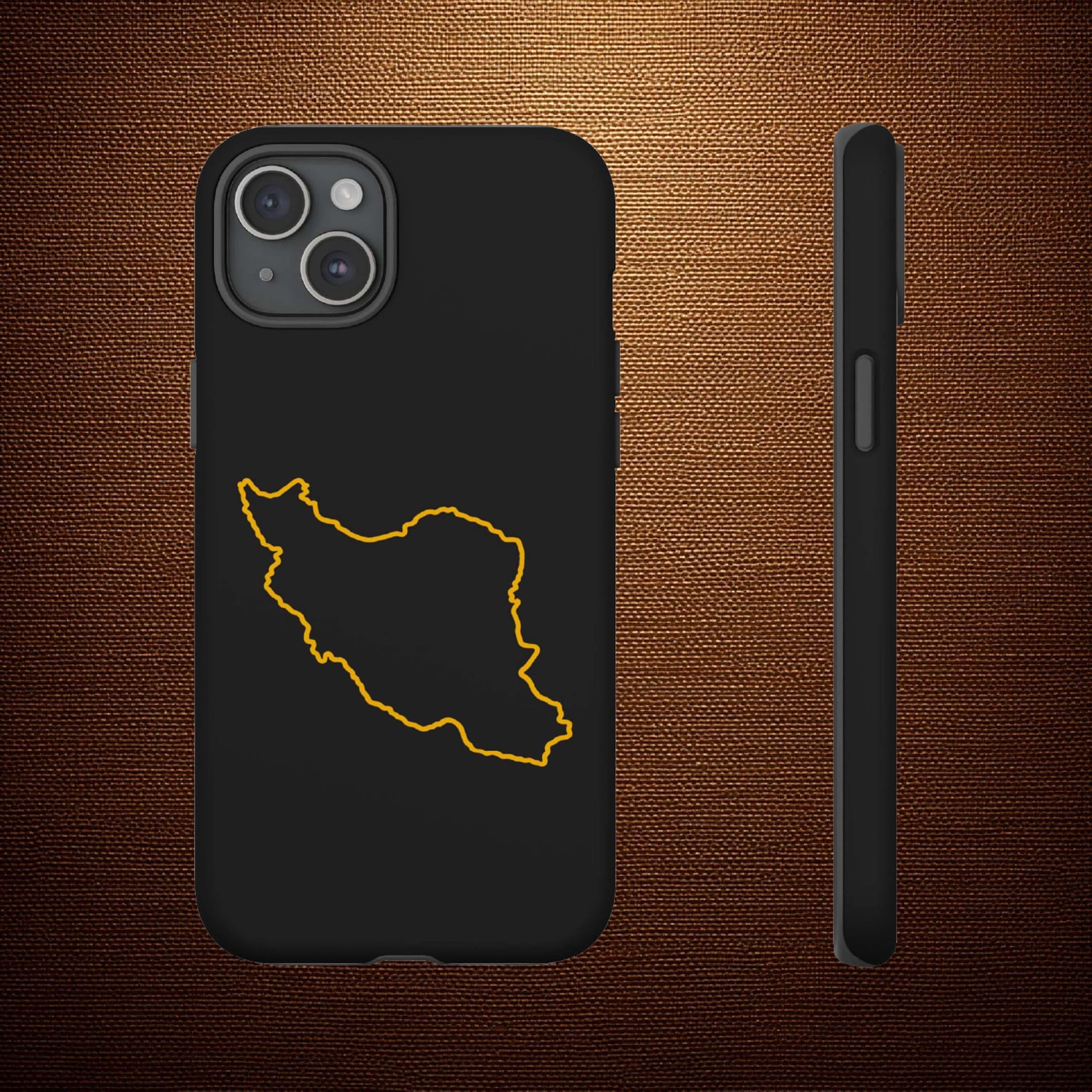
The only design in this collection that no one invented.
Everything else in this collection is an emblem — something a person designed and meant something by. This is not. This is the country, and the line around it has a date.
What you seeThe boundary running along the top of the shape, west of the Caspian.
What is knownIt is the Aras river, and it became the border by treaty in 1828. The Treaty of Turkmenchay fixed the boundary there after the Erivan, Nakhchivan and Talysh khanates passed to Russia — losses begun fifteen years earlier at Gulistan, in 1813.
What you seeThe long, comparatively straight boundary on the right of the shape.
What is knownMuch of it was settled by arbitration rather than by war or geography. In 1872 a British-led commission under Goldsmid divided the region: Sistan to Persia, the right bank of the Helmand to Afghanistan. Lines drawn by commissions tend to look like this — straighter than rivers, straighter than mountains.
What you seeThe Caspian shore in the north, the Persian Gulf and the Gulf of Oman in the south.
What is knownThese are the parts no treaty drew. They are the oldest and least negotiable edges of the shape, and the only ones that were never anybody's decision.
What you seeA single continuous stroke, unbroken, closing on itself.
What is knownWearing a country's outline is a modern habit. For most of the history of every other symbol in this collection, nobody could have drawn this shape at all — accurate national outlines are a product of modern surveying, and the practice of using one as an emblem of belonging is more recent still.
Three dates made this shape: 1813, 1828 and 1872. Two of its edges are water and were never negotiated. It is the only design in this collection that no one invented.